The "Business Value at Startup Speed" (BV@SS) Resource Center
As a large, established company, one of the challenges our Information Technology (IT) division faces is the desire to achieve strong business results with the same fast pace as a smaller, start-up company. Our Chief Technology Office lead the charge to develop a methodology and supporting tools for achieving this goal. While the BV@SS buzz word had been gaining traction, and the principles had buy-in from all of the IT subdivisions, the challenge was determining how best to communicate what changes were occurring, and maintaining a consistent location to store information about said changes.
There was one other key requirement for this solution that was absolutely non-negotiable: The solution we pursued had to be easy to maintain after the initial release, should the project change hands.
Our first step in determining our solution was assembling a team of experts. We spoke with an assortment of Project Managers, Developers, Architects and Change Managemers who had already been migrated to the new methodology to their own respective groups. From speaking with these individuals, we were able to establish a couple of key user goals:
As an IT professional who has been recently migrated to the BV@SS methodology, I want to be able to quickly figure out what practices and tools I need to get myself or my project team started.
As an IT professional who has already learned the basics of the BV@SS methodology, I want to learn more in-depth information about the best practices that I can use with my team to become more advanced in our approach to development
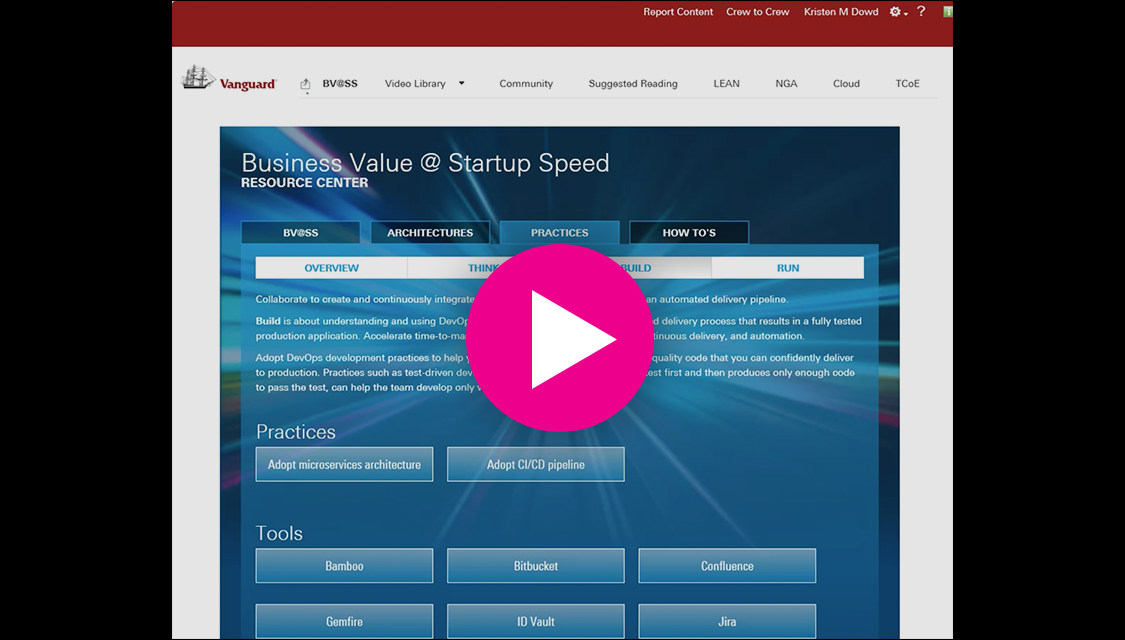
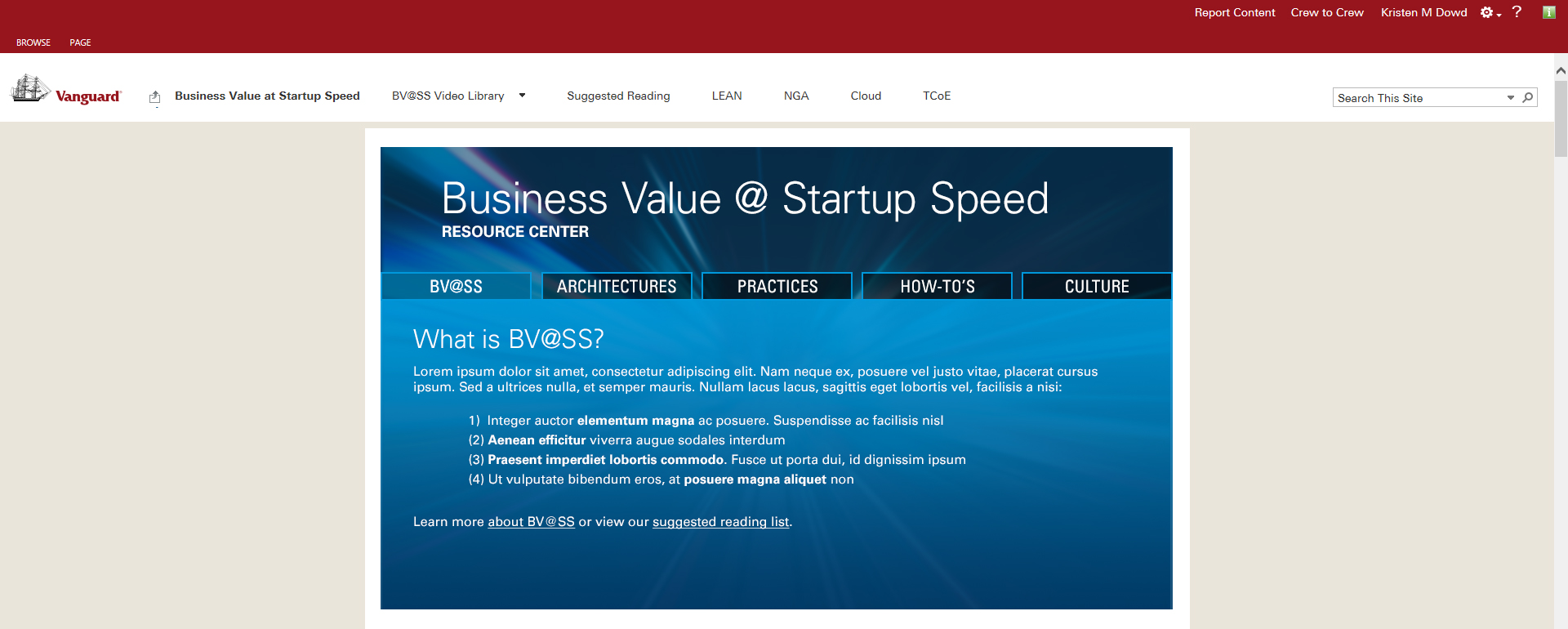
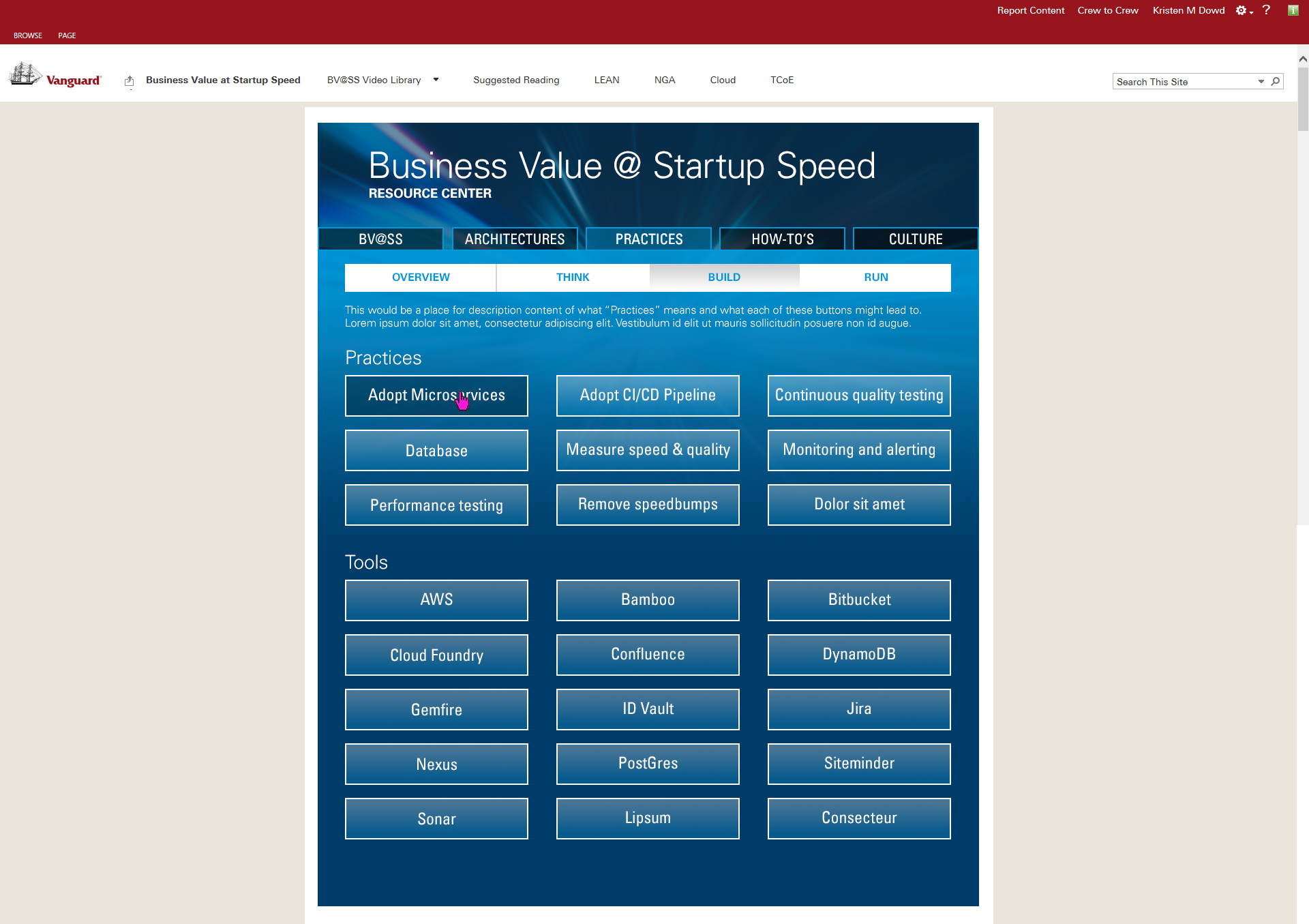
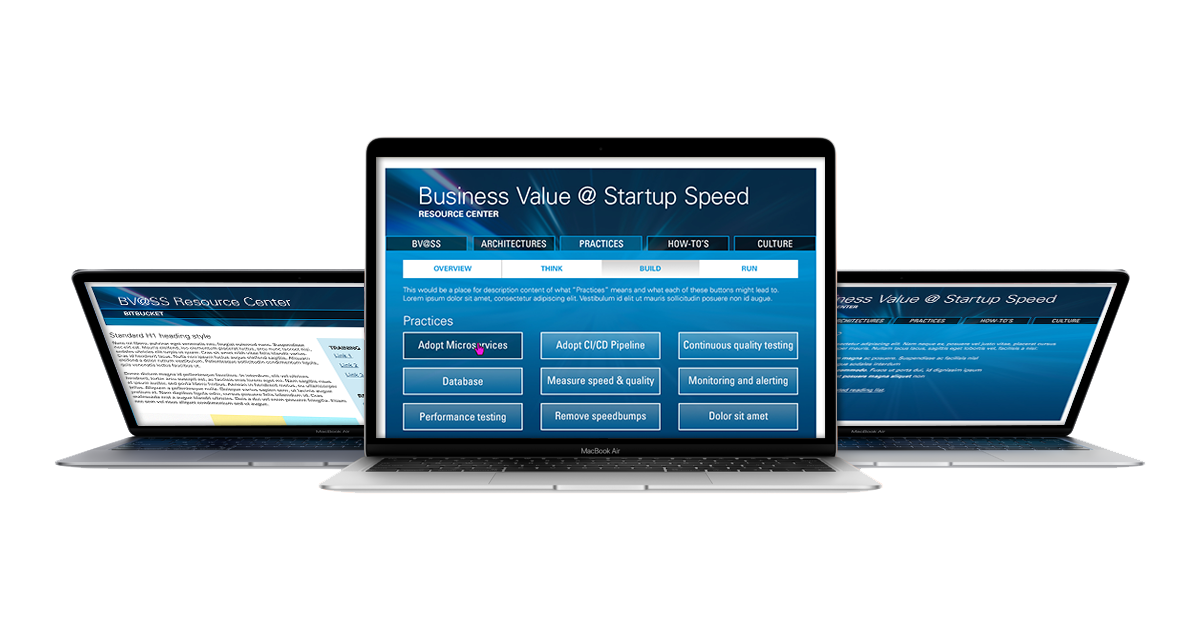
I delivered an internal team site with a storefront triage, featuring varying levels of information complexity depending on the user's request. For example, the user could come to our site wondering something a simple as “What does BV@SS stand for?” or as complex as “How do I implement a CI/CD pipeline?” The interviews conducted with our highly-technical, BV@SS-migrated emplloyees helped to determine the Information Architecture and language of the tab seets. Said tab content and buttons are populated dynamically by leveraging jQuery code that reads from a SharePoint list in order to fulfil the business goal of creating a custom-branded and low-maintenance solution.